Run the World
In a nutshell
Thanks to a Watson fellowship, American runner Becky Wade travelled the world getting to know running communities from Finland to Ethiopia and New Zealand. An interesting comparison of approaches to running, though the final winning marathon comes across as an all-American story.
Who it's for: Anyone tempted to combine running with seeing the world.
How would you like to pack a backpack and set off on a trip around the world? For free. There’d be just one task. Get to know new places and the local running communities. Sounds like a fairy tale? That’s exactly what the author of this book managed to do. Thanks to a Watson fellowship, Becky was able to go and see the world. She tells the story in Run the World.
Becky wasn’t an average American runner. While studying at Rice University in Texas she achieved several NCAA successes and several times made it to the US Olympic Trials. Still, she longed for a change. Maybe it was the realisation that she wouldn’t make it to the very top of the US team. But it was more a desire to see the world from a different perspective and to get to know people and training methods on the other side of the globe. And that’s exactly what the fellowship allowed her to do.
First stop. England.
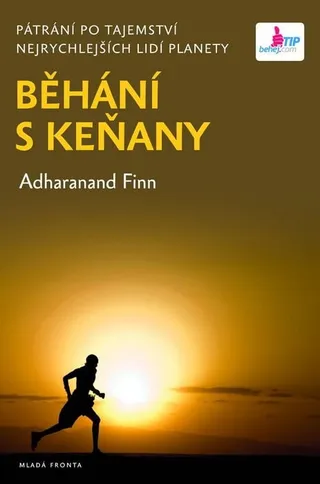
So in 2012 she packed a backpack with four pairs of running shoes and left the USA. The first stop was logically England. There she managed to watch the Olympic marathon as a spectator, but above all, thanks to good contacts, she got into the company of Kenyan athletes. They have a base in Teddington for their European running trips. Adharanand Finn writes about it in Running with the Kenyans. Becky also managed to do several training sessions with them. But it wasn’t just running. She was able to observe their everyday life, and she even cooked the mysterious ugali with Vivian Cheruiyot. Besides the recipe, she took away her first insights into training. She learned from the best. After all, Vivian won silver over 5,000 m in London and bronze over twice the distance (in Rio it was gold, and silver over 10,000 m). And there were more encounters. She certainly won’t forget a shared taxi ride with Jamaican sprinters Usain Bolt and Yohan Blake, whom she also got to watch training on the track. That’s what happens when your friends have friends…

Becky Wade
But she didn’t just watch the top athletes the Olympics brought to London. She experienced the local parkrun phenomenon first-hand. What’s behind its success? She found out for herself. But she’d had enough of London, so Becky headed to Oxford. She couldn’t miss the famous Iffley Road Track, where Roger Bannister ran the first sub-four-minute mile in 1954. Then she dived even deeper into the past. Probably everyone has heard of the sporting rivalry on the River Thames between Cambridge and Oxford. But since 1880 there has also been the Varsity cross-country race, with at least as big a rivalry. One more reason to go to Cambridge and get to know the running community there too. How does such a famous race compare with races at American universities? Two countries speaking the same language, but in this respect slightly different worlds.
The Swiss Alps
It was time to head north, to Ireland. Everyone in the USA comes from somewhere, and the author’s family has its roots there. So Becky spent a few days with distant relatives. She joined the local running club and ran a few races. A few days later she boarded a plane bound for Switzerland. Her first contact was Livia Burri in Bern. Although Livia has the same 5K time, in the much smaller Switzerland she’s one of the elite runners. But the aim in this country wasn’t to explore track running, but to head to the Alps, to the mountains. Becky ran a total of 342 miles in this beautiful country before leaving for Italy. There she recharged with family friends before the next stop.
Africa
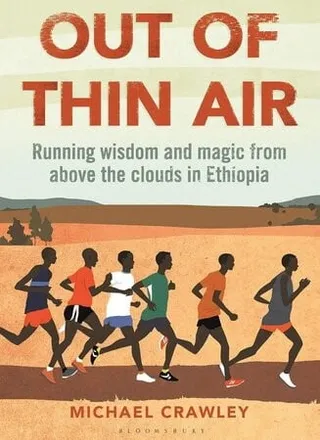
Ethiopia. Together with Kenya, the two countries with a near monopoly on long-distance winners. Because of the security situation in Kenya at the time, she chose Ethiopia. Her home became the Yaya Village training centre, about 12 km from the capital. There she joined the daily training. The high altitude really took its toll. But a far bigger shock was a completely different world from the one she knew. And it’s probably no surprise that she met the legendary Haile Gebrselassie there. What is this small great man like in everyday life?

In the footsteps of the running boom
The African mission was over, and next came the move to Australia and, above all, New Zealand. Because that’s where the worldwide running boom was born. And Arthur Lydiard is the man responsible. Broadly speaking, before him only athletes ran. He brought the rest of us to running too. Hobby runners. The book Dejiny behania (A History of Running) writes about it in detail. But Lydiard wasn’t just a coach of amateurs. Thanks to the success of his athletes, such as Peter Snell (three-time Olympic champion over 800 and 1,500 m), the whole world began learning about his methods. And it’s probably no surprise that Becky met Peter too…
Within sight of Mount Fuji
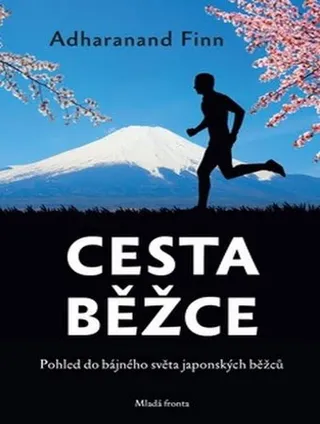
Japan. A country where running is a phenomenon. The next stop on the young runner’s trip around the world. Probably the best-known race, the Ekiden, has been run since 1917 from the former capital Kyoto to the current one, Tokyo. A team of men or women must complete the 508 km route as a relay. Becky was offered the chance to run for one of the teams and have her preparation fully paid. But that was against the rules of the fellowship. She declined with thanks and joined the amateur running community here too.
Scandinavia and a look into the past
The last countries she visited on her journey were Sweden and Finland. Why these? Because at the beginning of the 20th century these countries set the pace in short- and long-distance running. This is where world records were rewritten. This is where the term “Flying Finns” was born. After all, running success shaped the pride of a nation that broke free from Russian rule. So it’s no wonder the Finns considered Emil Zátopek a bit of a runner of their own. They fully understood the circumstances in Czechoslovakia at the time.

In conclusion
This journey too came to an end. Becky took stock of all the kilometres and experience and channelled them into her marathon debut. It took place at the California International Marathon just a few months after her return. At 24, Becky won the race in 2:30:41. That earned her sponsorship from Asics and Clif Bar and a chance to fight for a place at the Olympic Games. It’s hard to say whether her success came from the journey itself, or from the advice of coach Jim Beaven, whom she mentions many times in the book, or her mentor, the renowned coach Joe Vigil. He also coached Deena Kastor, who won marathon bronze at the Athens Olympics. Let Your Mind Run is a book in which she too describes his coaching skill. If Becky Wade caught your interest, don’t forget to check out her website or social media.
So what to say about the book?
+
The book mixes purely personal experiences of each place with an attempt to objectively record a piece of local running history. In less than a year Becky visited a total of 72 people or families, with whom she lived for some time. She got close to people who live through running, whether at an amateur or professional level, and it’s very interesting to compare these different approaches to running.
–
The minus was perhaps the very last chapter, the winning marathon in California. Mile by mile Becky describes her experiences on the course and puts them in the context of what the trip around the world gave her. It all comes across as if she won thanks to the advice she received in Finland or England or Ethiopia or New Zealand or… well, an all-American story through and through.