The perfect mile
In a nutshell
Neal Bascomb tells the gripping duel between three athletes racing to be the first to run a mile in under four minutes. Even if you know how it ends, you won't be disappointed.
Who it's for: Fans of athletics history and great sporting rivalries.
This American author is best known for his superb book about the hunt for Nazi criminal Eichmann, which brings new information straight from former agents of the Israeli secret service Mossad. It rightly earned the title of national bestseller. The drawback? We all know how things turned out for Eichmann…
But let’s look at Bascomb’s earlier book, The Perfect Mile, published in 2005. Here too there’s a gripping plot, and here too you more or less know how it will end. Three athletes fighting from a distance to be first. Who will be the first person in the world to run a mile in under four minutes? And is it even humanly possible?
From today’s perspective, it could be as gripping a story as who would be the first to run a marathon in under two hours. And is that even humanly possible? Today we know it is. Kenyan runner Eliud Kipchoge knows best: he did it in Vienna in 2019. It wasn’t a regular race, though, but a specially prepared show with 41 pacemakers. So the world record remains 2:01:39, which Kipchoge ran in Berlin. But the symbolic two-hour barrier fell.
How different were the 1950s from today? Very. Professional sport as we know it today was only just taking shape. Athletes were exclusively amateurs who worked on themselves alongside their studies or jobs.
The book follows the lives of three athletes in particular: Briton Roger Bannister, Australian John Landy and American Wes Santee. Three candidates for one first. We learn about the lives of these heroes. How did they train? What drove them forward? Who was the first to start getting close to the barrier? And who broke it? Our own Emil Zátopek may also deserve some credit. The Australian in particular looked up to his training methods and his interval training. Emil wasn’t the first to come up with this approach to developing as a runner, but he was the first (and only) one with such amazing results.
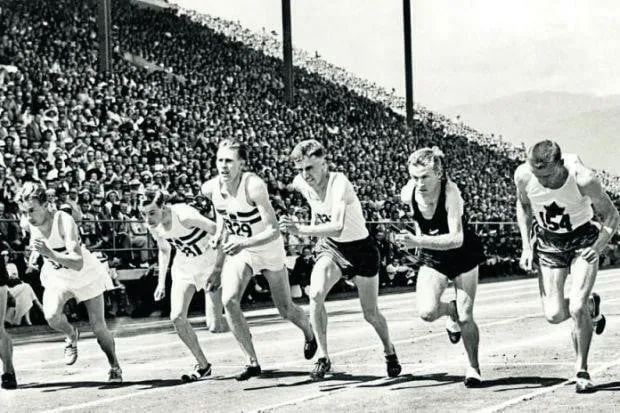
What seemed impossible finally happened in 1954. One of them ran 3:59.4. The impossible became reality. But it was a close call, and the record nearly didn’t fall. The race was almost cancelled because of bad weather. At the last moment the wind dropped, and 3,000 spectators could burst into cheers. History was rewritten.
For decades, people had waited for the magic barrier to be broken. But from 6 May 1954 it was no longer magic. Less than six weeks passed and the record books were rewritten again. Another of the trio improved the time to 3:58. That record didn’t last long either. The book tells us more about these battles too.

How far has humanity moved on, or rather what has the professionalisation of sport brought? For example, the current mile world record, which since 1999 has stood at 3:43.13. It’s held by Moroccan Hicham El Guerrouj.
Compared with today’s record, it might seem ridiculous to write a book about runners trying to beat four minutes. Give it a try. You won’t be disappointed.