The Race Against Time
In a nutshell
Richard Askwith searches for the secret of happy lifelong running among British runners over 65 and 75. Inspiration for everyone regardless of age. Half the stories would have been enough, though.
Who it's for: Runners of every age, especially those who are slowing down.
In Britain there are roughly 240,000 regular runners aged 65 and over, and almost 40,000 of them are over 75. What motivates them to keep going? The Race Against Time tries to uncover the secret of happy lifelong running. So it will be an inspiration for all runners, whatever their age.
Richard Askwith and his books
British author Richard Askwith is one of my favourites. Probably his best-known book is Feet in the Clouds. Among Czech readers, Today We Die a Little, a very well-made biography of Emil Zátopek, had a bigger response. Thanks to social media I found out about this new book. What adventures await runners later in life?
The author is (or was?) a pretty decent runner who used to fly through the clouds of the Lake District. That’s where this book begins. Together with friends from his youth, he set out at the age of 60 on a run over the local fells. He belonged to the luckier group: those who could still run. Even so, he was crushed by how huge the difference was compared with his youth. Life passes faster than it seems. The responsibilities of middle age caused a gradual decline in form. Damn. Will I never again feel what I used to feel when running?
First encounter with runners aged 80+
Richard later went to one of the many races open to the general public: parkrun number 841 in Bushy Park, Teddington. There he noticed a sign: “80 and over - Meet here”. The enthusiasm of these older, actually old, runners was truly infectious. Where do they find the desire to train when their performance has to decline? After all, you can’t fight time. Or can you?
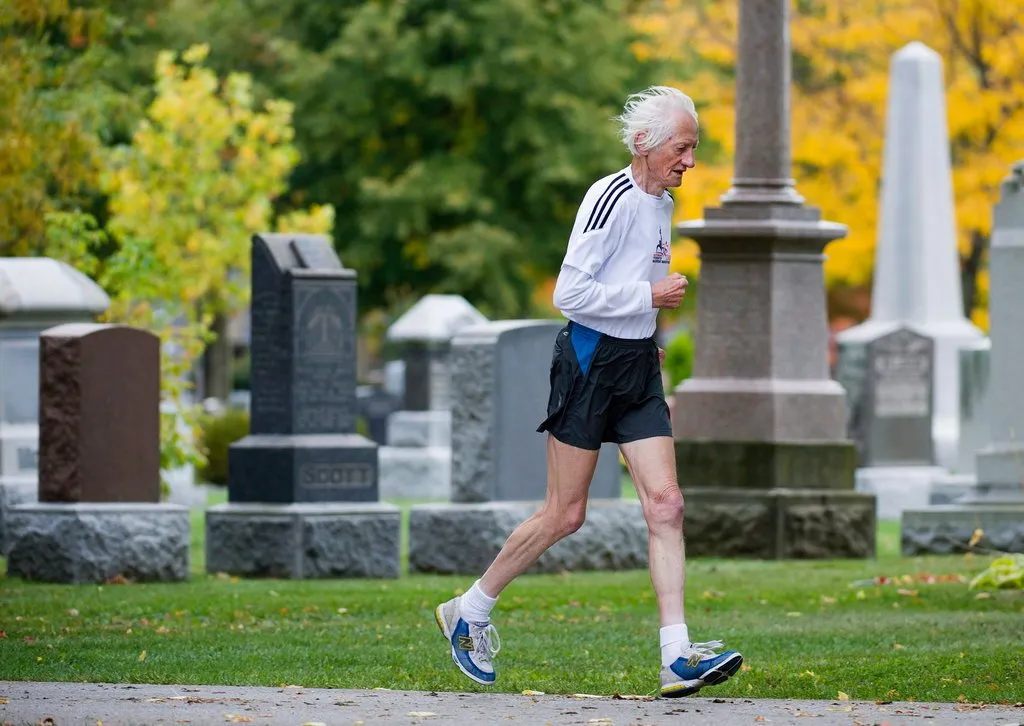
Ed Whitlock - 85 years old, marathon in 3:56:34
Askwith sets off into the world. He’s enchanted by the atmosphere of the masters world championships. The same passion, the same tension. He interviews one runner after another. Where does their secret of longevity lie? Athletes in the 100+ category aren’t an exception, for example American Julia Hawkins or Pole Stanisław Kowalski. Sadly, Richard didn’t get to run with Stanisław. The vital 104-year-old preferred a bottle of vodka, and the run never happened. The book is full of human stories. Czech athletes feature too, such as Karel Matzner, who wrote Toulky historií veteránské atletiky.
Is it (only) genetics?
No, there really aren’t one or two universal tips for coping with ageing. Every person is a different story. So the author goes to scientists and looks for answers there. Is longevity determined by genetics? Why do we age? And why do some people age faster? The secret lies in telomeres. You can imagine them as caps on the ends of our chromosomes. They protect the ends, and the bigger they are, the more protection they give. Elizabeth Blackburn, who won a Nobel Prize for the discovery, would certainly say more.
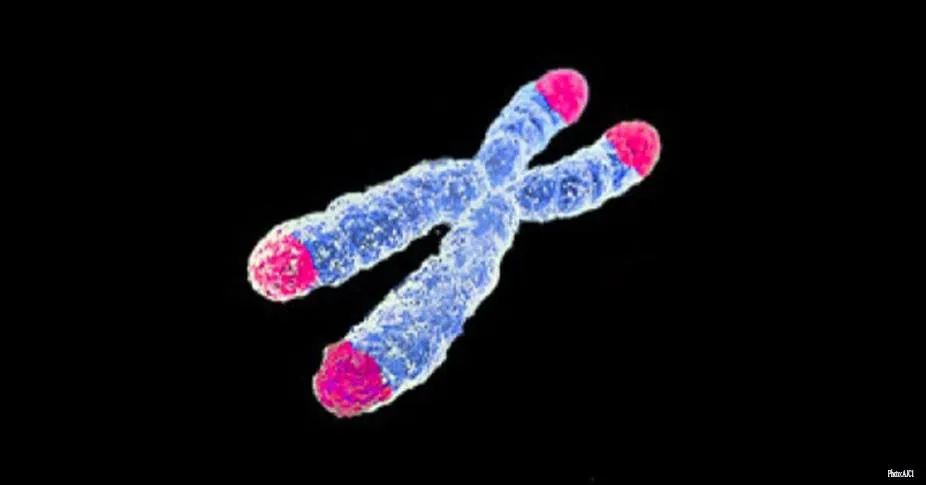
Telomere caps on a chromosome
Although genetics plays a big role, the rest of the effort is up to us. Just like with talent: talent alone isn’t enough, you have to work. So how should you train at an advanced age? The book debunks the idea that training should be easy. The goal isn’t to shuffle slow kilometres for several hours a week. There’s no time for that, and the body recovers much more slowly. The secret is short, fast runs. Yes, even at an advanced age you need to run intervals. Less (and faster) is more.
World Masters Athletics
But Richard doesn’t just take on other people’s experience. He leads by example. In these human stories he found his motivation again. He signed up for the World Masters Championships in Finland, where he would represent Great Britain. But he can’t escape his doubts about whether he’s worthy of such a race given his modest performance. He’s facing the 10,000 m. He discusses his worries with many (sometimes much) older athletes. The answer is always the same. It’s not about where you finish. It’s only about giving it everything you have.
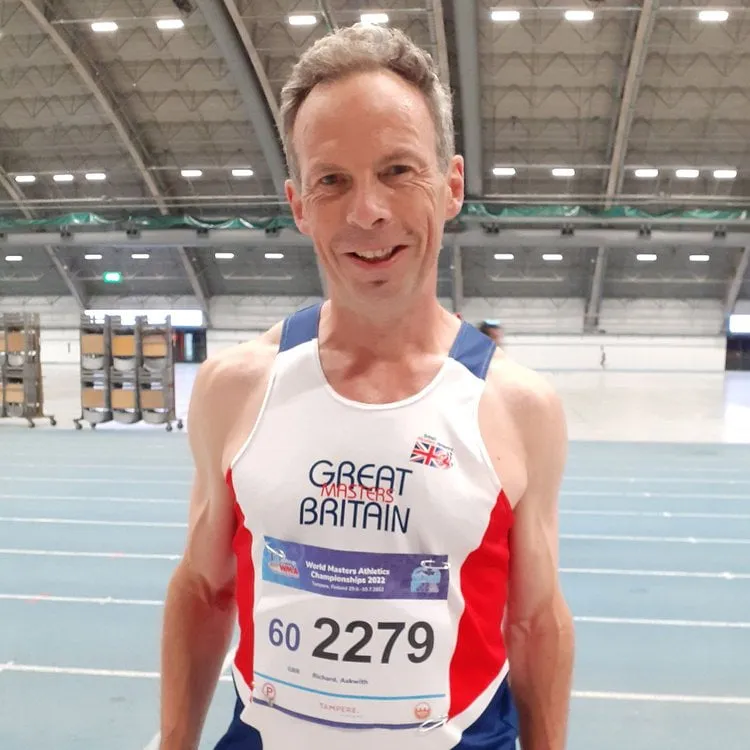
Richard Askwith
In the end, in Tampere Richard ran a personal best of 45:41 (in the M60 category). He certainly runs slower than 20 or 30 years ago, but the enthusiasm and joy of a job well done are exactly the same. He found motivation and desire, and that’s exactly what the book will pass on to you.
In my opinion, the book’s drawback is its length. Sometimes less is more. Instead of a “hundred” stories, half would have been enough. I also missed an index of the athletes mentioned.